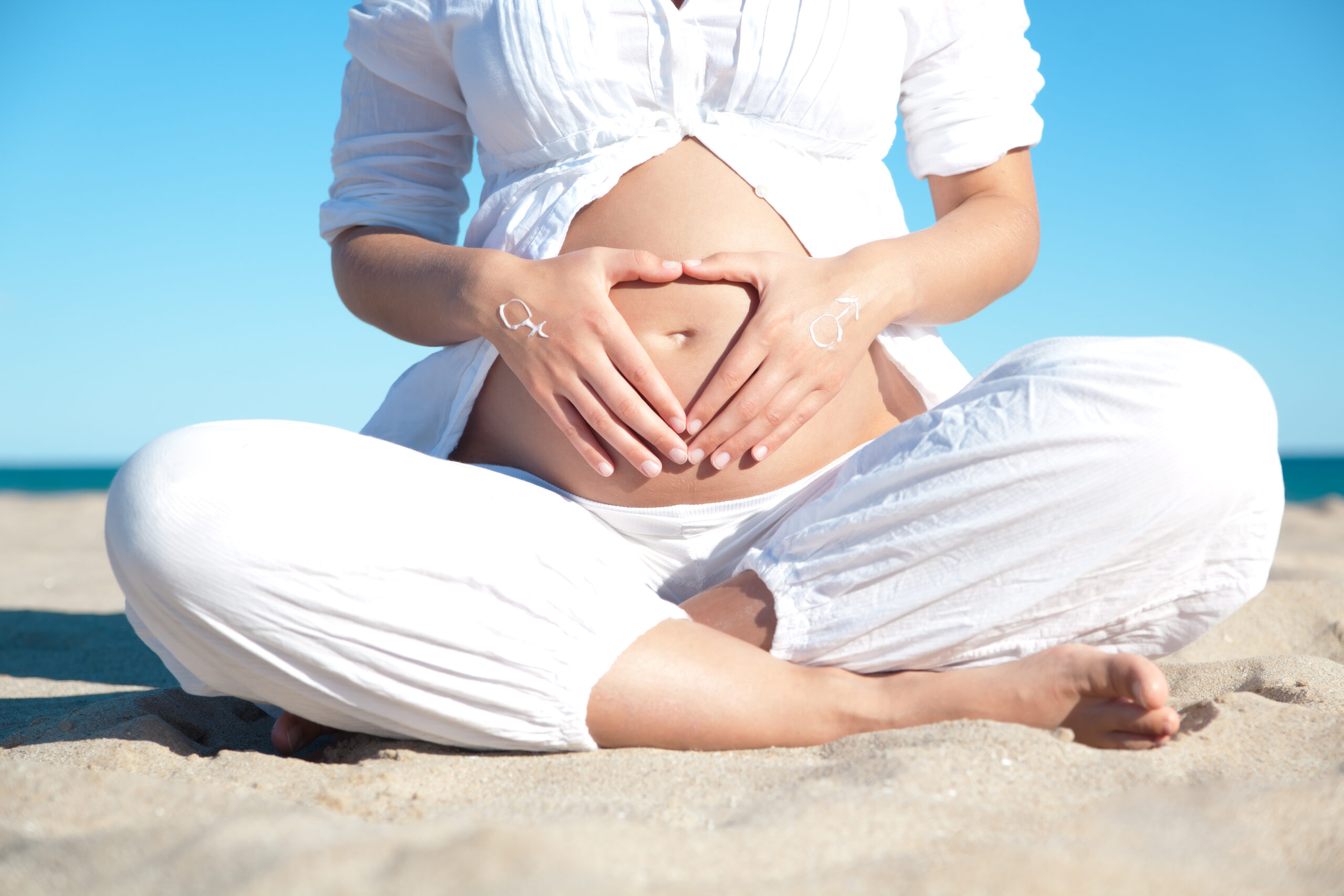
Discovering that your baby is in a breech position in the third trimester can feel overwhelming. While a c-section or an External Cephalic Version (ECV) are the standard medical options, many expectant parents would prefer a more gentle and non-invasive alternative. Traditional Chinese Medicine (TCM)—specifically the combination of acupuncture and moxibustion—offers a safe and clinically effective way to encourage a breech baby to turn head-down.
Understanding the Mechanism: How Does It Work?
In practice, addressing a breech presentation focuses on stimulating a specific acupoint known as BL67 or Zhiyin, located on the outer corner of the pinky toenail with a combination of acupuncture and moxibustion (the gentle burning of the herb mugwort (Artemisia vulgaris) near the skin to apply therapeutic heat).
Modern obstetric and physiological research reveals that stimulating BL67 has measurable biochemical effects. The localised heat triggers infrared thermal receptors in the skin, which stimulates the maternal endocrine system. Specifically, this thermal stimulation promotes the release of placental oestrogen and prostaglandins.
These natural maternal hormones gently increase uterine muscle tone and enhance foetal activity. The temporary boost in the baby’s movements gives them the exact momentum they need to naturally cartwheel into the optimal head-down (cephalic) presentation.
Landmark Clinical Trials
The scientific foundation for moxibustion and acupuncture in obstetric care is built on several high-profile clinical trials that demonstrate significant success rates.
The Cardini & Weixin Study (JAMA, 1998)
In a landmark randomised controlled trial published in the Journal of the American Medical Association, researchers evaluated 260 first-time mothers at 33 weeks of gestation. The treatment group received daily moxibustion at BL67 for 1 to 2 weeks, while the control group received routine care.
The Results: An astounding 75.4% of the babies in the moxibustion group turned head-down by the 35th week, compared to just 47.7% in the control group. The Takeaway: The researchers documented a substantial increase in objective foetal movements during the treatments, proving that moxibustion actively encourages the baby to shift positions safely.
The Neri et al. Study (2004)
An Italian randomised controlled trial looked at 240 pregnant women between their 33rd and 35th gestational weeks. One group received a synergistic combination of bilateral acupuncture and moxibustion at BL67, while the other group was observed under standard medical care.
The Results: At delivery, 53.6% of the treatment group achieved a head-down presentation, compared to only 36.7% of the observation group. The Takeaway: This study highlighted a vital secondary benefit: the need for c-sections due to breech presentation was significantly lower in the acupuncture and moxibustion group (52.3%) than in the control group (66.7%).
What the Systemic Reviews and Meta-Analyses Tell Us
When evaluating medical research, systematic reviews provide the highest tier of scientific evidence because they pool the data from multiple individual studies. Systematic reviews consistently validate the clinical benefits of moxibustion and acupuncture for breech presentation.
The 2023 Cochrane Systematic Review
The highly respected Cochrane Database of Systematic Reviews updated its analysis to evaluate 13 randomised trials encompassing 2181 pregnant women.
The Findings: The data concluded that moxibustion combined with usual care probably reduces non-cephalic presentation at birth compared to standard maternity care alone or sham moxibustion. Labor Interventions: The review found that women using moxibustion experienced a massive reduction in the need for oxytocin (synthetic labor induction/augmentation drugs) during delivery, with a relative risk reduction of nearly 72%.
The 2021 Liao et al. Meta-Analysis
Published in Healthcare, a comprehensive systematic review examined 16 randomised controlled trials involving 2555 participants. The Findings: The researchers confirmed that moxibustion significantly increases successful cephalic presentation at birth. The Synergy Factor: Interestingly, the review noted that when moxibustion and acupuncture are used together, they create a powerful synergistic effect, making the treatment even more effective than using either modality alone.
Timing and Safety Profile: A Gentle, Low-Risk Option
One of the greatest advantages of acupuncture and moxibustion is its exemplary safety record. An overview of multiple systematic reviews confirmed that the therapy has no major adverse side effects linked to the techniques. It represents a gentle, physiological shift that avoids the physical force required by external manual versions performed by obstetricians.
Optimal Treatment Window
Data across almost all major studies indicate that the perfect time to begin treatment is between 33 and 36 weeks of gestation.
Why early third trimester? Before 33 weeks, many babies will still turn on their own.Why not wait? After 36 or 37 weeks, space inside the uterus becomes highly constrained, making it physically more difficult for the baby to execute a full rotation. However, successful versions have still been recorded as late as week 38 or 39.
Integrating Acupuncture into Your Birth Prep
For parents facing a breech diagnosis, combining acupuncture and moxibustion offers an empowering way to actively participate in your birth journey. A typical clinical protocol begins with an in-clinic session where acupuncture is safely administered and the BL67 point is precisely mapped for the patient. Patients are then provided with moxa sticks and taught how to safely continue the 20-25 minute daily warming sessions at home for 10 days.
The scientific consensus is encouraging: while no single medical intervention can guarantee a turn, acupuncture and moxibustion stand out as safe, evidence-based, and highly effective tools that significantly tilt the odds in favor of a smooth, head-down delivery.
References
Cardini, F., & Weixin, H. (1998). Moxibustion for correction of breech presentation: a randomised controlled trial. JAMA, 280(18), 1580-1584.
Coyle, M. E., et al. (2023). Cephalic version by moxibustion for breech presentation. Cochrane Database of Systematic Reviews, (5).
Liao, J. A., et al. (2021). Correction of Breech Presentation with Moxibustion and Acupuncture: A Systematic Review and Meta-Analysis. Healthcare, 9(6), 619.
Neri, I., et al. (2004). Acupuncture plus moxibustion to resolve breech presentation: a randomised controlled study. The Journal of Maternal-Fetal & Neonatal Medicine, 15(4), 247-252.
Vas, J., et al. (2013). Using moxibustion in primary care to correct non-cephalic presentation: a multicentre randomised controlled trial. Acupuncture in Medicine, 31(1), 31-38.